

















From the launch archive: could the Core i5-12400 offer outstanding value?
Intel’s 12th generation promised faster performance and lower temperatures. Among the incoming models, the Core i5-12400 stood out as a particularly promising value option in this pre-launch…
Intel’s 12th-generation processor launch attracted praise for performance and quality. When this article was written, only the unlocked K-series models were available to buy.Processors require a compatible motherboard. Its socket must match the processor family, including the physical pin layout and platform requirements.For 12th-generation desktop processors, the launch platform used LGA1700 sockets and Intel 600-series chipsets, including Z690. The original article’s reference to Z390 was incorrect.The article noted that the high-end motherboards available at launch could be expensive, raising the cost of a new build.That was expected to change around CES with more affordable 12th-generation processors and lower-cost H670, B660 and H610 motherboards.Looking back at Intel’s 11th generation, the six-core, twelve-thread Core i5-11400 had been an understated option. Its incoming 12th-generation successor, the i5-12400, appeared promising on paper. The article anticipated better gaming performance, lower temperatures and lower power use, with value for money as the central attraction. These were expectations before direct testing, not verified results for every system.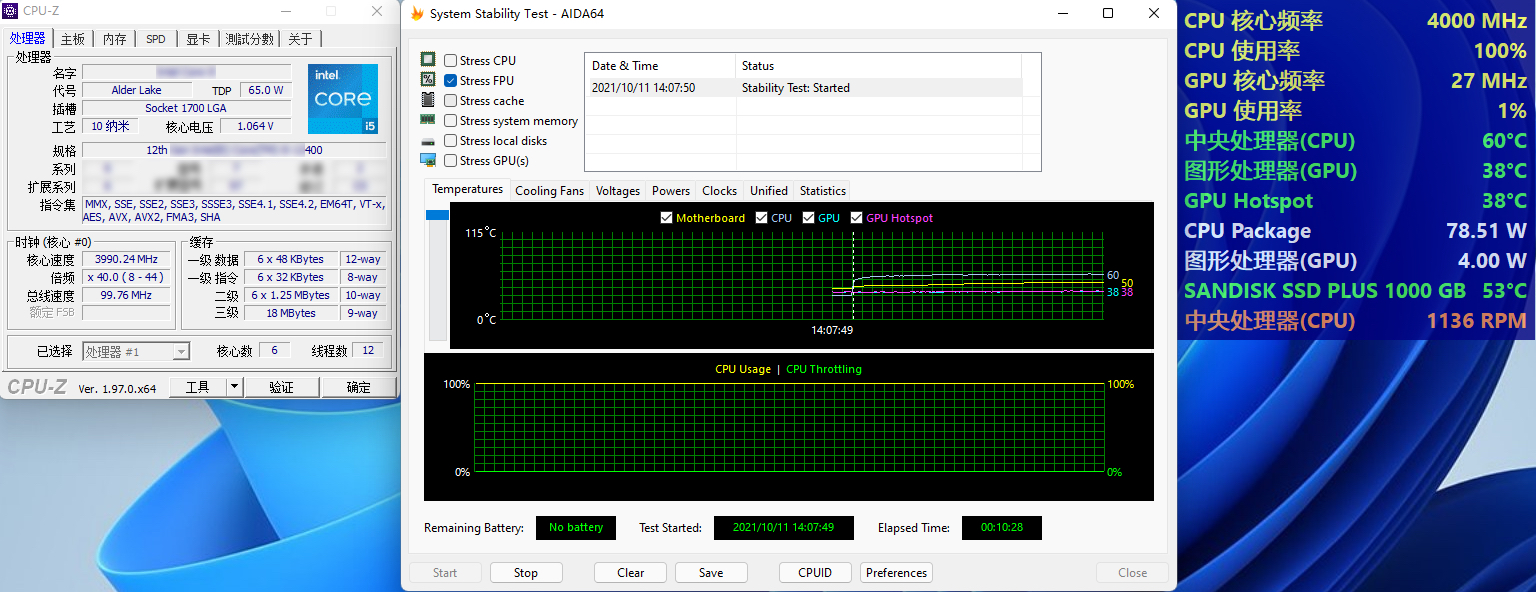 Link to the image and article sourceThe i5-12400 uses Golden Cove performance cores only, with a 2.5GHz base frequency and a maximum turbo frequency of 4.4GHz. What about power consumption?Its processor base power is 65W and maximum turbo power is 117W. The article expected this to make cooling easier than on higher-end models; the actual cooler must still suit the processor, case and operating conditions.Enjoyed the article? Visit our blog for more articles and new stories, and stay up to date with the latest news! ❤️
Before the i5-12400’s release, leaks offered early indications of performance. Igor’s Lab published a preview using a Core i5-12600K adjusted in BIOS to approximate the i5-12400. The results suggested that Intel’s lower-priced models could offer strong value, but this was an approximation rather than a direct test of the final processor.Importantly, the tested chip was still a higher-tier i5-12600K with more L3 cache. Treat those results with caution.Price was the most appealing part of the prospect. At the time, the i5-11400 sold for under $200, with the version lacking integrated graphics, i5-11400F, cheaper still. The author expected similar pricing for the i5-12400. With the anticipated performance and efficiency, it looked like a potential budget favourite and a sign of renewed competition from Intel. These figures describe the historical market, not current offers.Interested? Follow our blog for more updates.